

Case Studies
Case Studies
- Preparation of Hyperbranched Resin and Its Effect on the Performance of Epoxy Resin Channeling Control Agent (Part 1)
- Preparation of Hyperbranched Resin and Its Effect on the Performance of Epoxy Resin Channeling Control Agent (Part 2)
- Construction of A New Organic-inorganic Composite Emulsion and Its Enhanced Mechanical Properties of Oil Well Cement(Part 1)
- Construction of A New Organic-inorganic Composite Emulsion and Its Enhanced Mechanical Properties of Oil Well Cement(Part 2)
- The Application Prospects of DeepSeek Large Model in Petroleum Engineering(Part 1)
- The Application Prospects of DeepSeek Large Model in Petroleum Engineering(Part 2)
- Development and Performance Evaluation of Efficient Asphalt Dispersant (Part 1)
- Development and Performance Evaluation of Efficient Asphalt Dispersant (Part 2)
- Development and Performance Evaluation of Efficient Asphalt Dispersant (Part 3)
- Research and Application Status of Drilling Fluid Plugging Materials (Part 1)
Abstract :
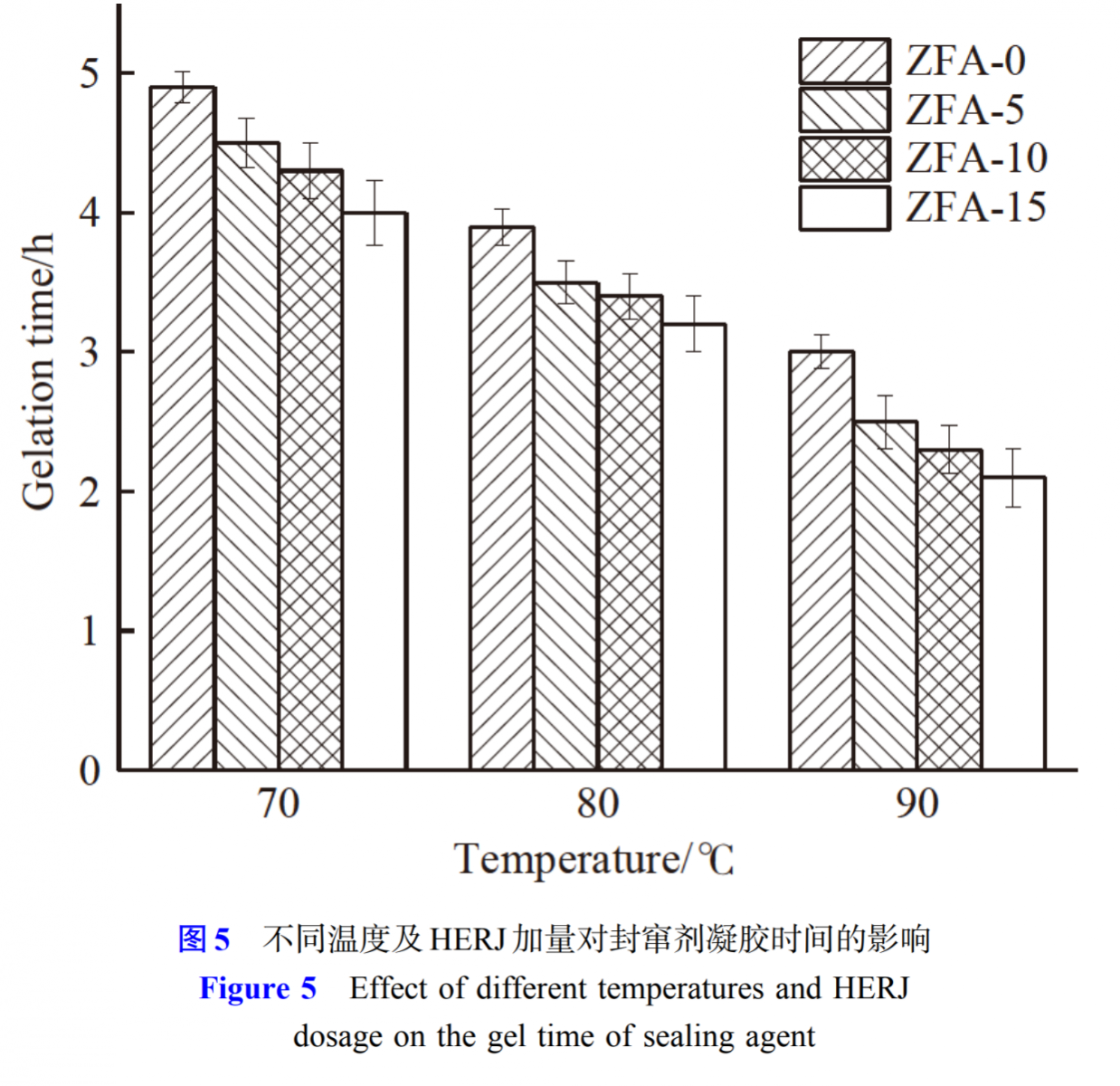
To address the issues of high viscosity, uncontrollable gelation time, and brittleness in epoxy resin plugging agents during cementing operations, a superbranched resin (HERJ) was developed to enhance the gelation performance and mechanical properties of epoxy resin plugging agents. The structure of HERJ was characterized by nuclear magnetic resonance (NMR), and its effects on the gelation and mechanical properties of epoxy resin plugging agents were evaluated. Experimental results demonstrated that HERJ is a superbranched target product containing epoxy groups. HERJ can reduce the viscosity of epoxy resin plugging agents to 35 mPa·s at 30–90°C and control the gelation time to 2.1–4.9 h at 70–90°C. Compared to the base sample without superbranched resin, the compressive strength of the cured product increased by 19.50%, and its toughness improved by 13.58%. Plugging effectiveness tests showed that the resin plugging agent increased the gas migration pressure in fractured cement rock from 0.1 MPa to 4.5 MPa, indicating excellent sealing performance. Scanning electron microscopy (SEM) analysis revealed that the resin-cured product exhibits good impact resistance. Thermogravimetric (TG) analysis confirmed its thermal stability. Finally, differential scanning calorimetry (DSC) experiments were conducted to determine the kinetic parameters of the epoxy resin plugging agent's curing reaction.
Keywords: annular pressure well; plugging agent; super branched resin; epoxy resin; plugging
Cemented casing in oil and gas wells is prone to micro-cracks under complex downhole stress conditions, leading to annular pressure issues that threaten production safety. To restore wellbore annular sealing, plugging materials are required. At present, the commonly used sealing agents mainly include Portland cement, gel materials and resin-based materials, etc.While Portland cement offers advantages like low cost and simple application principles, its extrusion process requires precise particle size control. Larger particles may hinder extrusion or cause excessive pressure. Gel material has good effect in inhibiting displacement fluid channeling, but its strength is low, and its long-term stability in high-temperature and high-pressure environment is poor, which is difficult to guarantee long-term sealing requirements. Epoxy resin based materials have the advantages of high strength and durability after curing, and have gradually become a research hotspot for sealing materials. Halliburton developed an epoxy resin system suitable for temperatures between 15-93°C, achieving 71.9 MPa compressive strength. However, this epoxy resin faces challenges in curing process control and exhibits high brittleness, requiring optimization.
This study developed a hyperbranched resin (HERJ, Figure 1) to enhance the construction performance and mechanical properties of epoxy resin plugging agents, with NMR characterization of HERJ's structure. The research evaluated HERJ's effects on the gelling performance and mechanical properties of resin plugging agents, conducted plugging efficacy evaluation experiments, performed SEM analysis and thermal stability assessment of cured products, and analyzed the curing kinetics through DSC experiments to obtain kinetic parameters.
1 Experimental Section
1.1 Instruments and Reagents
Bruker A-400 Nuclear Magnetic Resonance (NMR) Spectrometer (Switzerland: Bruker); HTD13145 Rotational Viscosity Meter (Qingdao Haitongda Special Instrument Co., Ltd.); TAW-1000 Microcomputer-Controlled Electro-Hydraulic Servo Rock Property Testing System (Changchun Chaoyang Testing Instrument Co., Ltd.); NYL-300 Pressure Testing Machine (Wuxi Building Materials Instrument Machinery Co., Ltd.); ZEISS EVO MA15 Scanning Electron Microscope (Karl Zeiss Microimage Co., Ltd.); STA449F3 Thermal Analyzer (Switzerland: Mettler Toledo); DSC3 Differential Scanning Calorimeter (Switzerland: Mettler Toledo).
The following reagents were used: 3,5-Dihydroxybenzoic acid (PCA), benzyl glycidyl ether (BGE), tetraethylammonium bromide (TBAB), N,N-dimethylformamide (DMF), trimethylolpropane triglycidyl ether (TMPGE), tetrahydrofuran (THF), and benzyl dimethylamine (BDMA) (all from Chengdu Kelong Chemical Co., Ltd.); methyl hexahydrophenyl anhydride (MeHHPA, from Chengdu Huaxia Chemical Reagents Co., Ltd.); and phenyl glycidyl ether (PGE, from Shanghai Liming Chemical Co., Ltd.). All reagents were of analytical grade.
1.2 Synthesis of HERJ
Dissolve PCA (0.100 mol), BGE (0.100 mol), and TBAB (0.005 mol) in 40 mL of DMF, transfer to a three-necked flask, purge with nitrogen for 10 min, and react under nitrogen protection at 90°C and 200 rpm for 5 h. Next, dissolve 0.300 mol of TMPGE and 0.015 mol of TBAB in 100 mL of DMF, then transfer to the three-necked flask and continue the reaction under nitrogen protection at 90°C and 200 rpm for another 4 h. After reaction completion, dissolve the product in 100 mL of THF, wash with 80°C hot water (3×100 mL), followed by cold ether (3×100 mL). Dry the precipitate under vacuum at 40°C until no further weight loss occurs, yielding the product resin HERJ, as shown in Synthesis Route in Figure 1. The structure of HERJ was characterized by NMR using chloroform-D (CDCl₃) as the solvent.
.png)
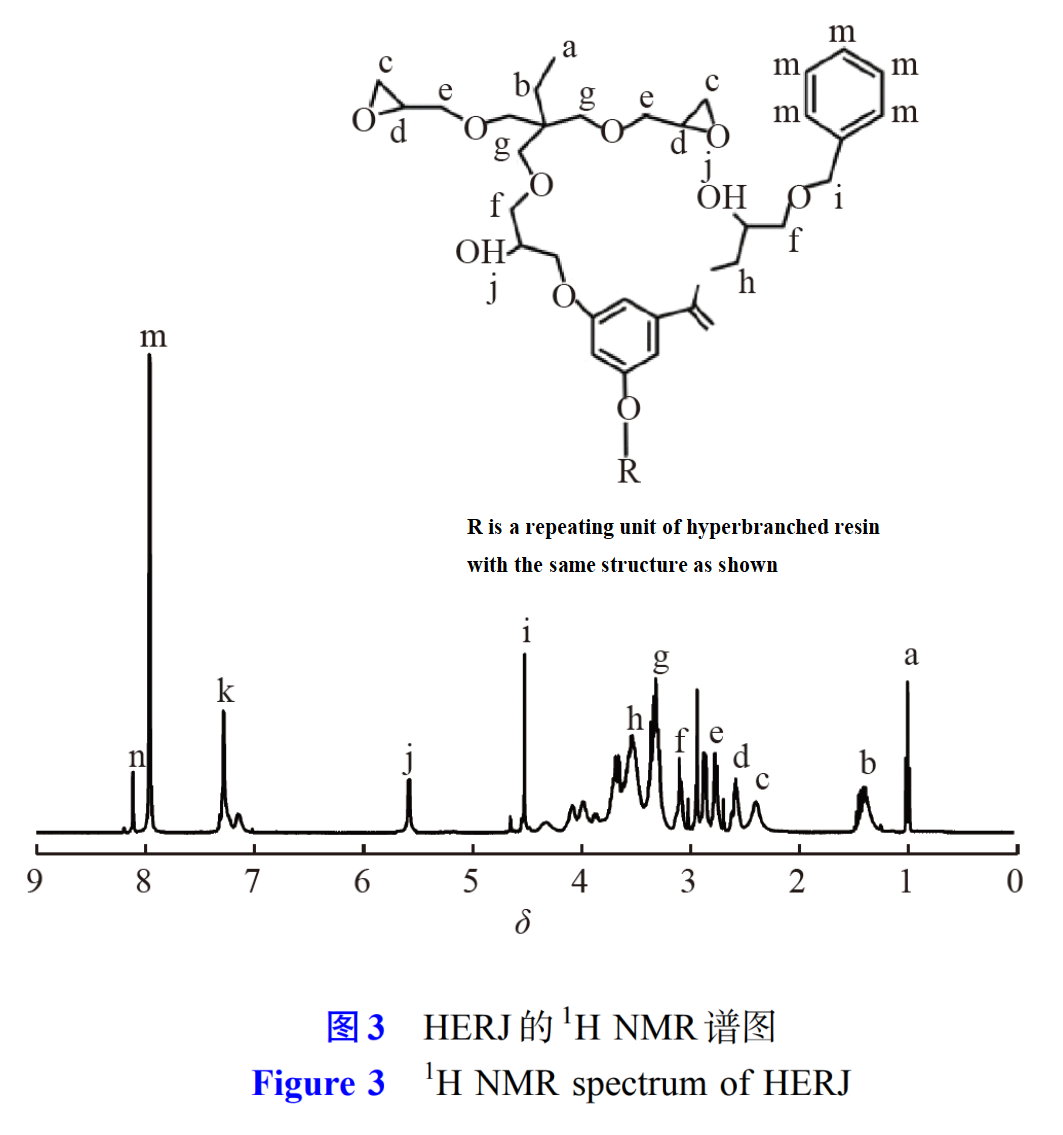
HERJ: dark yellow liquid, yield 71%; 1H NMR δ: 0.94 (t, J=7.3 Hz, 3H), 1.38 (m, 2H), 2.55 (s, 2H), 2.73 (td, J=8.3 Hz, 4.8 Hz, 1H), 2.82 (m, 2H), 2.91 (t, J=7.5 Hz, 2H), 3.29 (dd, J=14.4 Hz, 7.2 Hz, 2H), 3.51 (m, 2H), 5.55 (m, 1H), 7.26 (m, 2H), 7.94 (m, 2H), 8.11 (m, 2H).
1.3 Evaluation of HERJ's Impact on Epoxy Resin Sealing Agent Performance
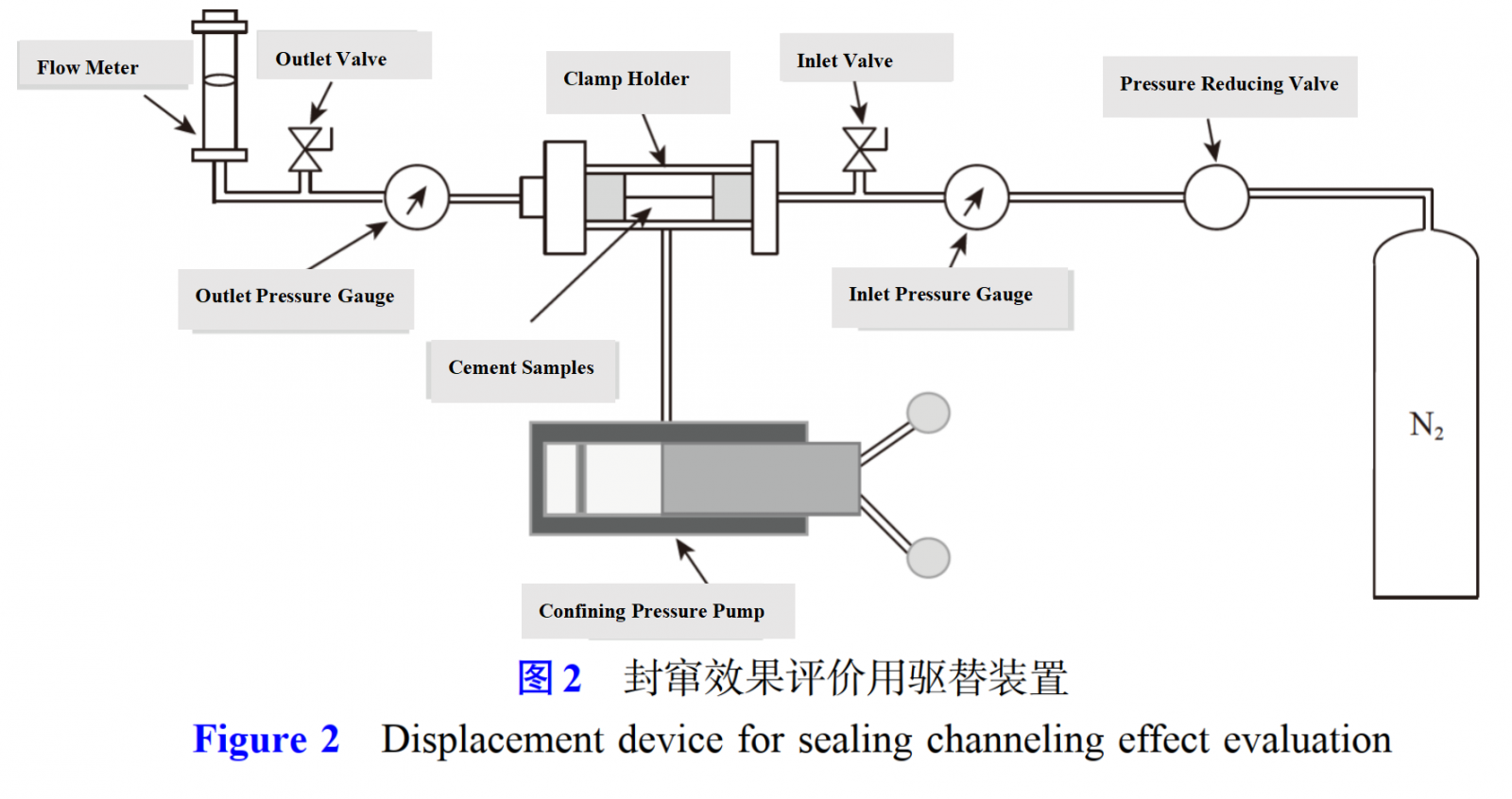
This study evaluates the effects of HERJ on epoxy resin plugging agent viscosity, gelation time, cured material mechanical properties, plugging efficacy, microstructure, and thermal stability. The epoxy resin plugging agent formulations used in the evaluation are shown in Table 1. Viscosity measurements were conducted using a rotational viscometer in accordance with the national standard GB/T 10247-2008 "Viscosity Measurement Methods". Gelation time determination followed the standard GB/T 33315-2016 "Determination of Gelation Time for Phenolic Resin in Plastics". The plugging efficacy evaluation procedure is illustrated in Figure 2: First, cement stone joints were created by pouring prepared cement slurry into a 25 mm diameter, 50 mm high mold. After 4 hours of initial setting, a 1 mm fine iron wire was inserted from the top. Following another 24-hour setting period until complete solidification into a cement column, the wire was removed to create vertical cracks. The plugging agent was then injected into these cracks and cured in a 90°C water bath for 48 hours before demolding. Samples were subsequently placed in a displacement device's clamp, where 6.0 MPa confining pressure was applied before nitrogen injection. Pressure changes were recorded until the first bubble appeared at the outlet flow meter, marking the breakthrough pressure. Higher breakthrough pressure indicates superior plugging performance.The uniaxial compression tests of epoxy resin cured specimens were conducted in accordance with the national standard GB/T 50266—2013 "Standard for Experimental Methods of Engineering Rock Masses". The cured samples of the sealing agent were analyzed using electron microscopy for microstructure examination. After drying in an oven, the test specimens were bonded to the sample stage with conductive adhesive, and the microstructure of the fracture surfaces of the cured specimens was analyzed using scanning electron microscopy.
.png)
The thermal stability analysis of the cured product of the sealing agent was conducted by thermogravimetric analysis (TG). The test temperature range is 20 to 800 ℃, with a heating rate of 20℃/min and nitrogen atmosphere protection. Differential scanning calorimetry (DSC) was employed to investigate the curing kinetics of resin blocking agent . Place the freshly prepared sample of the sealing agent solution into the DSC instrument for temperature program scanning, and simultaneously put it in an empty crucible for comparison. Four groups of different heating rates: 5℃/min, 10℃/min, 15℃/min, and 20℃/min, with a test temperature range of 20 to 200℃.
2 Results and Discussion
2.1 Structure and Characterization of HERJ
Figure 3 presents the 1-HNMR spectrum of HERJ. Multiple characteristic peaks were observed in the spectrum. Characteristic peaks consistent with the TMPGE methyl group appeared at δ0.94, characteristic peaks consistent with the TMPGE methylene group appeared at δ1.38, δ2.91 and δ3.29, and characteristic peaks consistent with the epoxy group and methylene group appeared at δ2.55, δ2.73 and δ2.82. Characteristic peaks consistent with the hydrogen on the benzene ring appeared at δ7.26, δ7.94 and δ8.11. A characteristic peak consistent with the methylene group connected to the ether bond appeared at δ3.51, and a characteristic peak consistent with the hydroxyl group formed by the opening of the epoxy group appeared at δ5.55.
2.2 Effect of HERJ on Curing Properties of Resin Blocking Agent
The viscosity of cement plugging agents is closely related to their injection performance. Figure 4 demonstrates the viscosity changes of resin-based plugging agents within the 30-90°C temperature range. As shown in Figure 4, the viscosity of the plugging agent gradually decreases with increasing HERJ dosage and temperature. Within this temperature range, the viscosity of a 15% HERJ-plugging agent can drop to 35 mPa·s. This is attributed to HERJ being a super-branched resin with a highly branched structure, where molecular chains remain uncoiled and intermolecular distances are relatively large, resulting in weaker intermolecular forces. Higher temperatures promote molecular sliding, further reducing intermolecular forces and leading to viscosity reduction. The low viscosity of the plugging agent ensures easy injection into micro-cracks in cement rings, thereby achieving effective crack sealing.
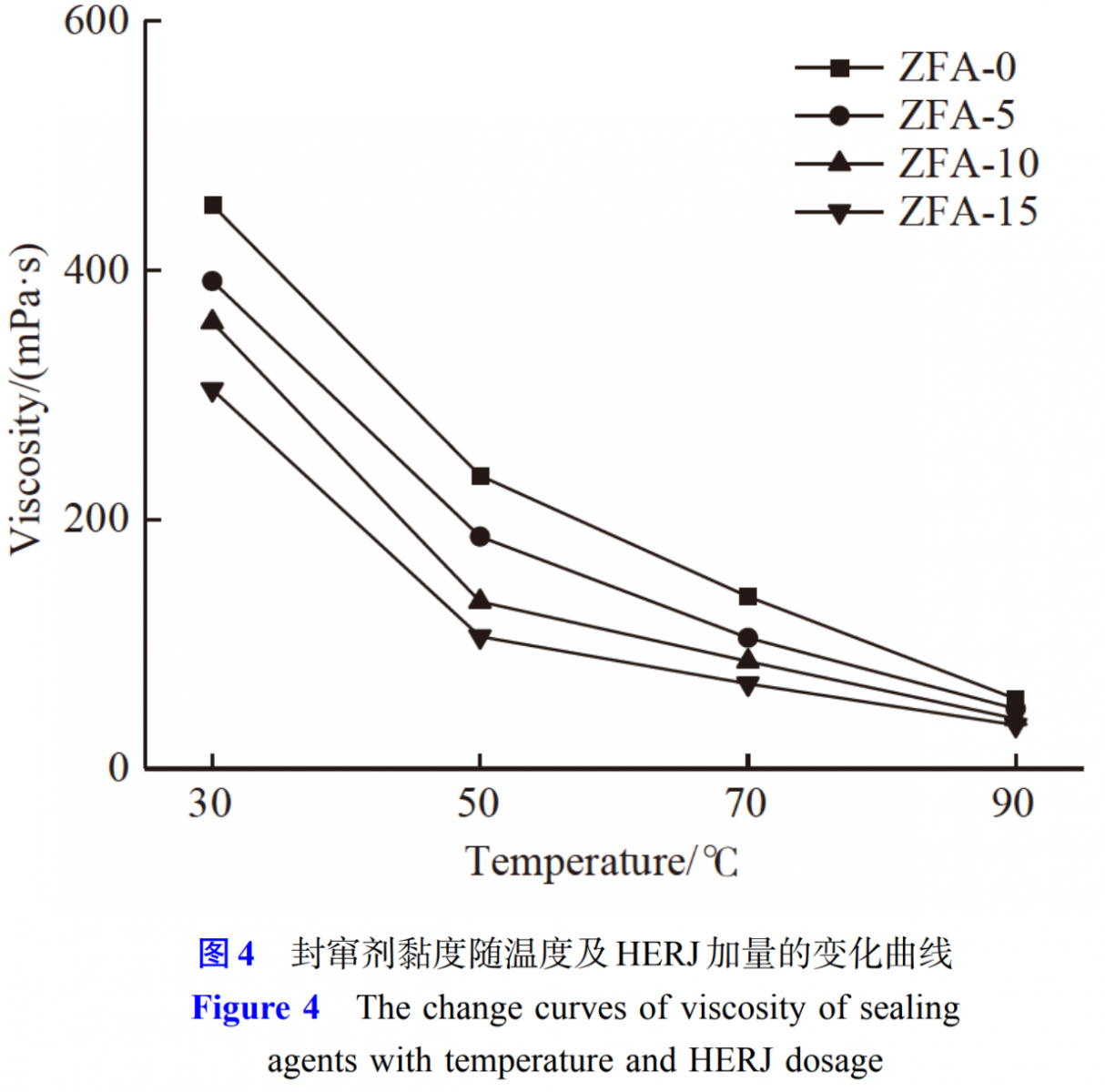
Figure 5 illustrates the gelation time of the plugging agent as a function of HERJ dosage at curing temperatures ranging from 70 to 90°C. The data demonstrates that increased HERJ dosage shortens gelation time, attributed to the abundant active hydroxyl and epoxy groups at the molecular ends of the hyperbranched resin HERJ, which facilitate intermolecular cross-linking and accelerate curing. Field applications require precise gelation time control to ensure accurate plugging agent injection and timely curing. The developed plugging agent achieves controllable gelation times (2.1–4.9 hours) within the 70–90°C range, demonstrating excellent field applicability.